
 Facebook
 X
X
 Pinterest
 Copy Link
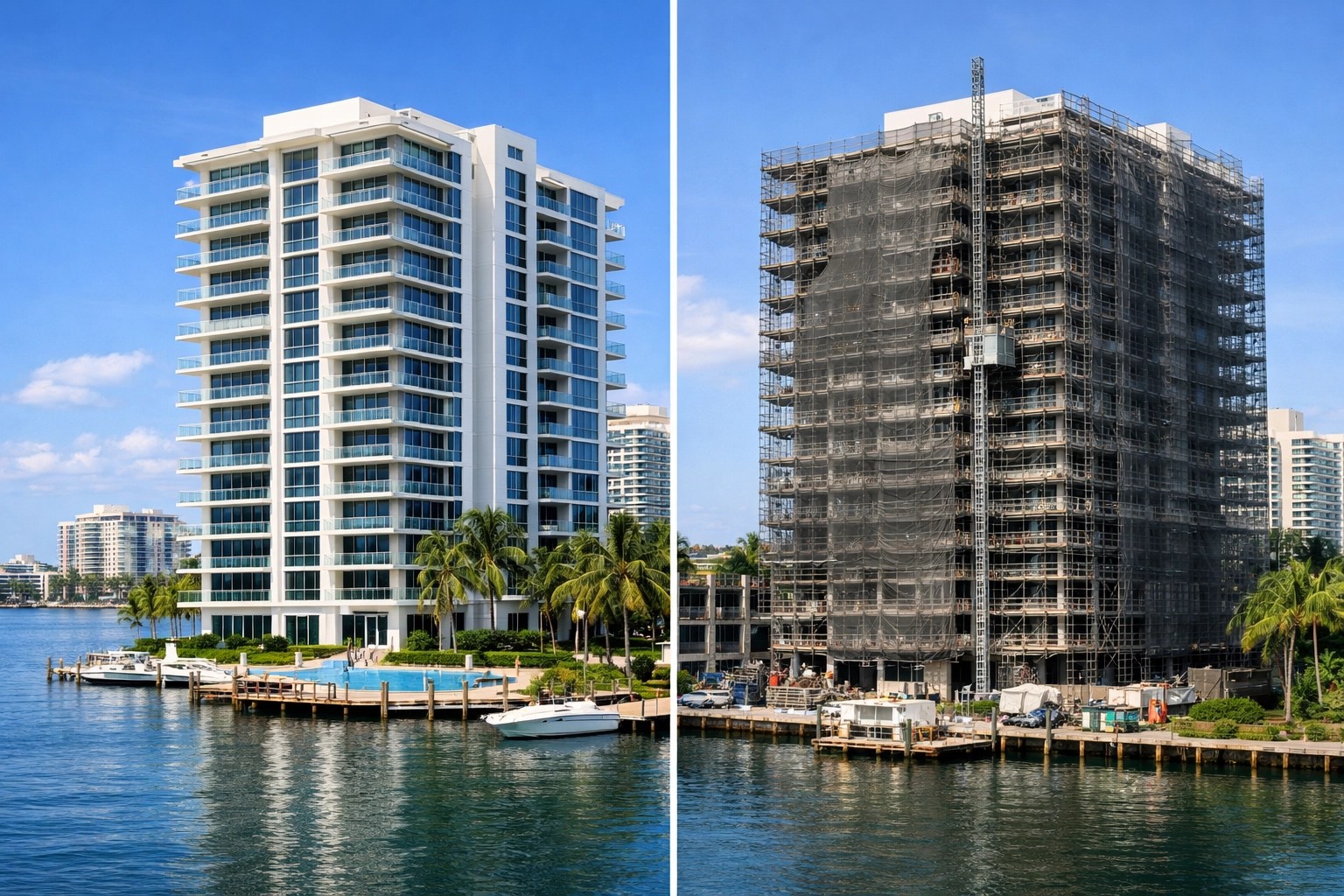
In Part 1, I broke down why Florida’s condo laws aren’t “punitive.” Instead, they’re a buyer filter. Specifically, they force the truth to the surface. So now we get to the part that actually makes you money: spotting the buildings run like adults.
Actually, not every building is in the same place right now. Some are already buttoned up. For instance, boards have funded reserves and teams have handled projects. However, others are stuck in the messy middle with jackhammers and special assessments.
That’s why I’m going to walk you through two examples from my own market. One is already operating clean. Meanwhile, the other is getting there the hard way.
Quick context on why I look at condo buildings a little differently: I’m John Gillen, P.A., and I act as an Information Architect for my clients. Furthermore, I’m a Licensed Community Association Manager (CAM) in Florida. Consequently, I live in the operational details—budgets, reserves, and meeting compliance. So when you compare buildings, that CAM lens matters because resale usually hinges on the unsexy stuff.
What Does “Best-Run Building” Actually Mean?
Initially, before we dive into specific buildings, let’s get clear on what I mean. Specifically, a best-run building is about financial hygiene and structural accountability.
A best-run building has:
- Fully funded reserves with a clear capital plan.
- Completed structural projects such as roof or facade work.
- Up-to-date insurance that doesn’t send owners scrambling.
- Low delinquency rates among unit owners.
- Board transparency with regular financial updates.
Indeed, these buildings don’t just meet requirements; they exceed them. Therefore, the payoff is higher property values and serious peace of mind.
Case Study #1: The Intracoastal Icon, Already Winning
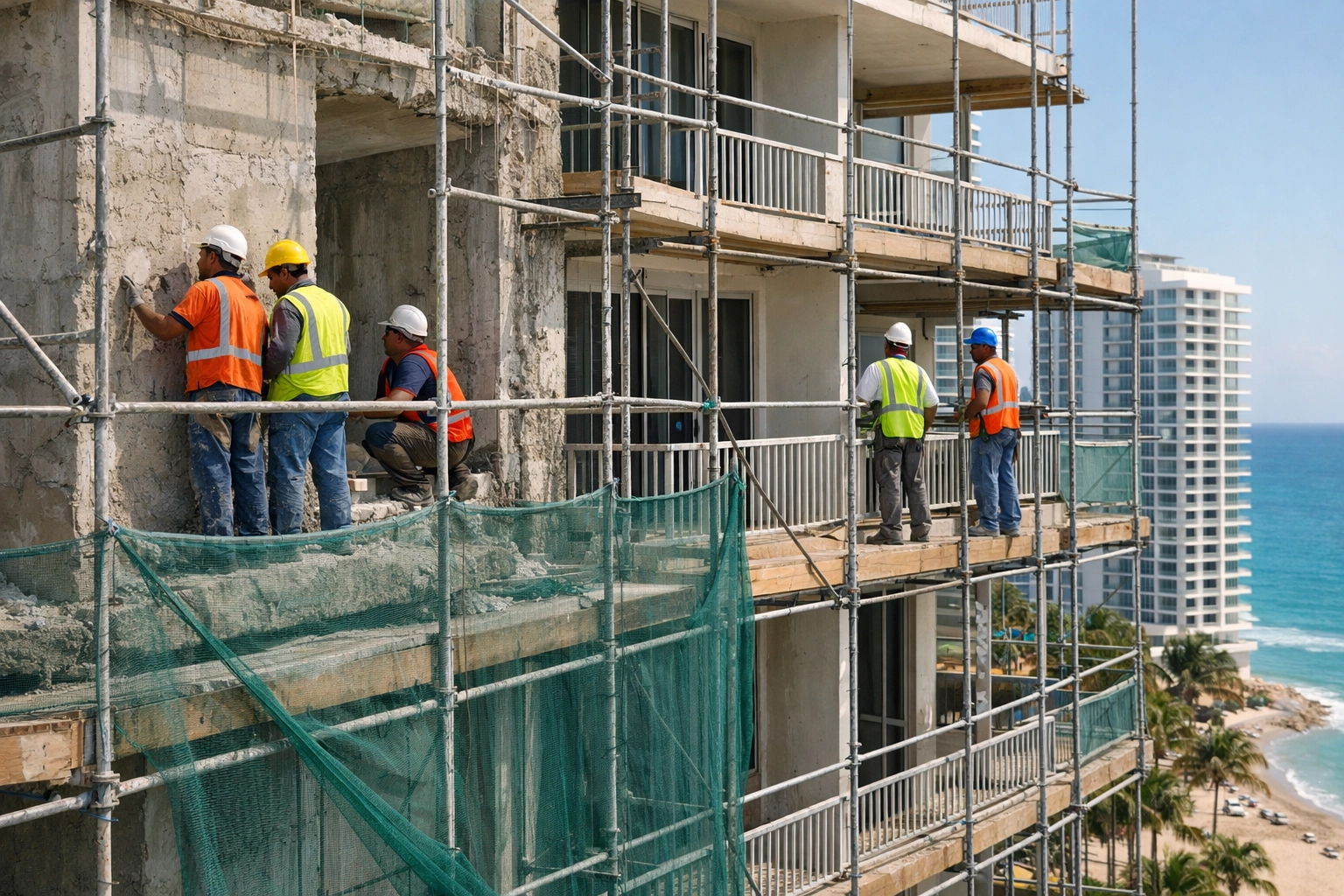
Initially, let me show you what “best-run” looks like when leadership treats operations like a real business.
The Intracoastal Icon is a high-rise on the Intracoastal. Basically, it’s not about being the newest tower. Instead, it’s about steady governance and a board that treats transparency like a competitive advantage.
Specifically, here’s what I’ve seen firsthand:
- Lower fees: the HOA cut maintenance fees about 5% after refinancing the insurance policy.
- Funded reserves: the board fixes issues early instead of paying “emergency pricing.”
- Clean deal flow: the HOA keeps financials transparent, which helps buyers get financing.
In fact, I recently worked with a buyer on a higher-floor unit. Because the numbers told the story of stable insurance and healthy reserves, the buyer’s lender loved it. Consequently, the appraiser loved it. And my client? They’re sleeping easy because they bought into long-term stability.
Ultimately, when you’re evaluating a building, ask for the reserve study. If the board can produce it quickly, you’re looking at a building that’s doing it right.
Case Study #2: The Pompano Pioneer, A Real-Time “Reckoning”
Now let’s talk about the flip side: The Pompano Pioneer.
If you want to understand what I mean by “reckoning,” this is it. For example, a building runs the “deal with it later” playbook and then the bill shows up.
Actually, this isn’t about “bad people.” Instead, it’s a reset where old habits collided with a new world of mandatory structural compliance. In 2026, buildings don’t get to hide anymore.
The Pompano Pioneer is in the getting punched in the mouth and still doing the work category. Specifically, it can be a smart buy if you’re properly capitalized.
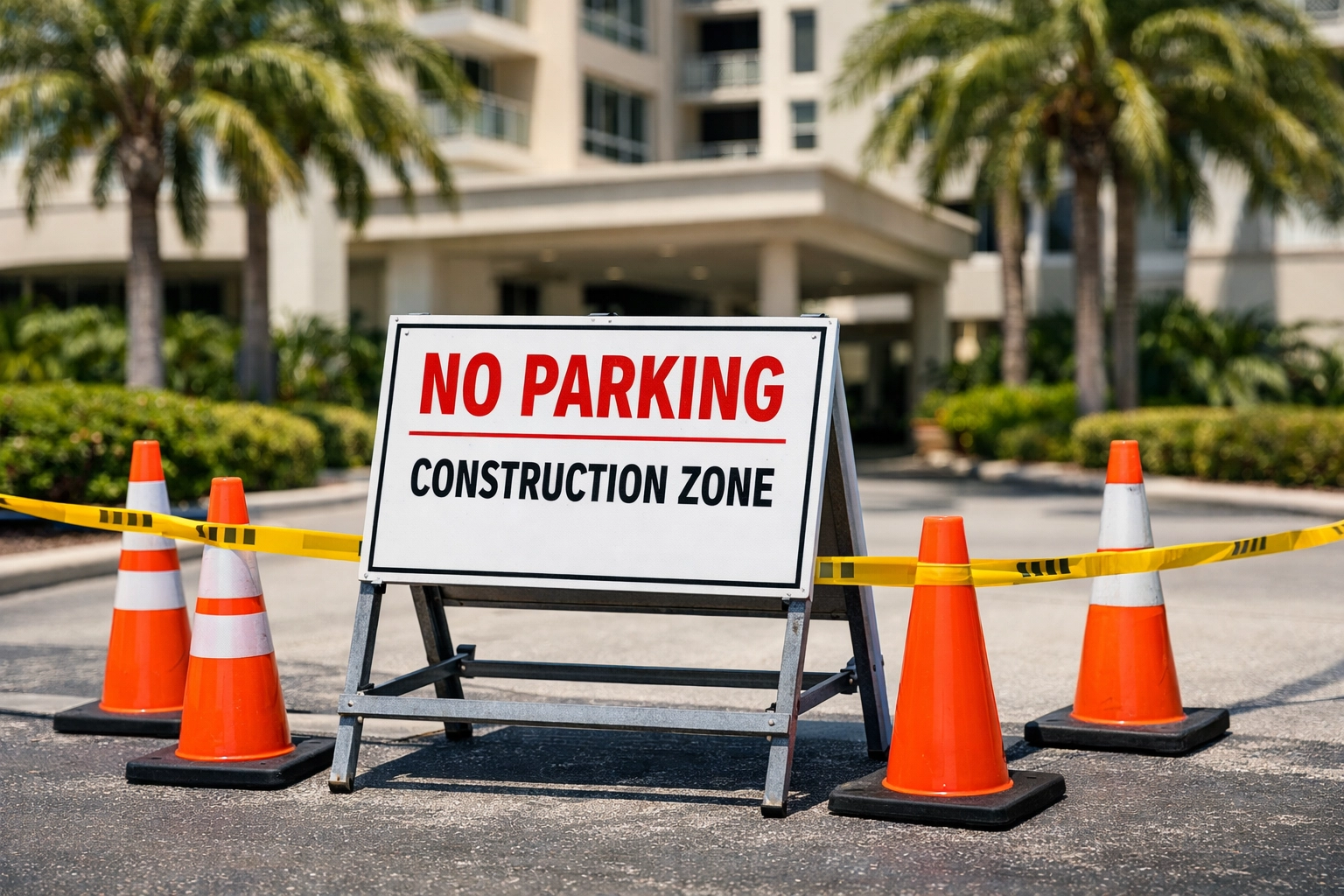
Currently, here’s what’s happening: it’s a full catch-up campaign. For instance, there is hallway refinishing and a three-story parking garage reconstruction. Consequently, this work has been chewing up daily life for two years.
The Reality on the Ground
I’m going to describe this the way it feels: you walk up and you hear the work. For instance, you see dust in the air and equipment staged.
Here’s what residents are dealing with right now:
- No parking access for 2/3 of the building during construction.
- Off-site parking and shuttles.
- Noise and dust—real construction-zone living.
- A legit parking lottery depending on which section is open.
Furthermore, this is the price of kicking the can for 15 years. And the pain isn’t just financial. Specifically, you pay with inconvenience every single day.
But here’s the part that matters: the end is visible. As of early 2026, the building is roughly 80% through the major projects. Consequently, by 2027, you’re looking at:
- Brand-new elevators.
- Refinished hallways throughout.
- A fully compliant sprinkler system.
- A rebuilt parking garage.
When that’s done, you’ve got a building in the heart of Pompano Beach where the “ugly years” are behind it. Therefore, you buy the work while it’s still loud, not after it’s shiny.
Why This Matters for Buyers
If you’re the type of buyer who can handle short-term pain, The Pompano Pioneer is a textbook opportunity.
Specifically, you’ll need:
- Cash reserves to get through lender scrutiny.
- Patience for the final year of disruption.
- Vision to see the 2027 value.
Check those boxes and you’re buying into a pristine property before it becomes the obvious choice.
How to Spot These Buildings Yourself
Whether you’re looking for a building at the finish line or one sprinting toward it, here’s what I recommend:
1. Ask for the Reserve Study
This is your financial X-ray. Specifically, a healthy reserve study will show:
- Current reserve balance.
- Planned expenditures.
- A clear funding schedule.
And here’s the key update: Structural Integrity Reserve Studies (SIRS) are no longer optional.[^1][^2]
Now layer in the 2026 Digital Portal mandate: owners should be able to pull these records instantly. Consequently, proactive listing agents should attach them to the MLS supplementals upfront.
2. Review the Insurance History
Ask for the past three years of master insurance policies. Specifically, look for premium stability and coverage limits that match the replacement cost.
3. Look at the Project Timeline
If the building is mid-project, ask what percentage of the work is complete. Furthermore, ask about the projected completion date. Buildings that can answer these questions are managing the process.

4. Check the Delinquency Rate
A building with many owners behind on maintenance fees is a building in trouble. Specifically, anything above 5% should raise concerns.
5. Attend an HOA Meeting (or Read the Minutes)
Initially, if you’re serious about buying, read six months of minutes. It tells you everything about the board.
For instance, you’re looking for patterns:
- Are they proactive or reactive?
- Are they transparent?
- Do they have a plan?
Because of that, you can predict your future “surprise assessment” risk.
The Bottom Line: Buy the Building, Not Just the Unit
In South Florida’s current market, buying a condo isn’t just about a floor plan. Instead, it’s about buying into a building that’s prepared for the next decade.
And zooming out—this is the whole Sins of the Snowbirds thesis: the “sins” were years of deferring maintenance, and the “reckoning” is happening now. Buildings that delayed the work are paying for it in a chaotic window. Therefore, lenders and insurers trust the proactive buildings first.
The Intracoastal Icon shows us what the finish line looks like. Meanwhile, The Pompano Pioneer shows us what the reckoning looks like up close.
Actually, both are smart buys, but they require different strategies.
Working with John Gillen, P.A. means having a Strategic Steward on your side. Furthermore, as a former HOA president and licensed CAM, I’ve seen these projects from every angle. Consequently, I can help you spot the red flags and make a decision with confidence.
Book a free 60-minute consult and let’s walk through your options.
Further Reading & Credible Resources
[^1]: Florida Senate Bill 4-D (Building Safety) — Senate Summary
[^2]: Florida Senate Bill 154 (Condo Amendments) — Senate Summary
Next up in Part 3: The buyer’s checklist: exactly what documents to request and how to avoid buildings playing catch-up.
Author, Licensing, and Disclosures
Author: John Gillen, P.A.
John Gillen, P.A. provides residential real estate services in South Florida with the mindset of a Strategic Steward. With over 20 years of experience driving growth and managing complex variables—from global SaaS portfolios to large-scale capital campaigns—John brings an “Achiever” drive to every transaction. He specializes in the intricate South Florida condo market, excelling at “arranging” the messy variables of Florida’s legislative compliance, HOA hurdles, and 50-year building recertifications. With a Bachelor’s in Business Management, a Master’s in Counselor Education, and a Master’s in Educational Leadership, plus licenses as both a Realtor® and a Licensed Community Association Manager (CAM), he provides solutions where others only see complexity. John acts as an Information Architect, helping clients dissect market noise and weeding out what doesn’t apply. Backed by Better Homes & Gardens Real Estate Florida First, he combines boutique service with major brand resources.
A Quick Note on the “P.A.”: Clients often ask if the “P.A.” in my name means I’m from Pennsylvania! It actually stands for Professional Association. Much like a law firm or a medical practice, it’s a formal business structure that reflects the high level of professional discipline and accountability John brings to his real estate practice.
- Real Estate Sales Associate: SL-3445594
- Licensed Community Association Manager: CAM-59384
- Designations: At Home with Diversity® (AHWD) | Accredited Buyer’s Representative® (ABR)
- Affiliations: National Association of REALTORS® | BeachesMLS
Professional Disclaimer:
The information provided in this blog post is for informational purposes only and does not constitute legal, financial, or professional real estate advice. Specifically, for guidance on Florida real estate transactions or condo regulations, please consult with a qualified professional.
Editorial & Market Disclaimer:
The views, research, and opinions expressed in this blog are strictly those of John Gillen, P.A. and do not necessarily reflect the official position of Better Homes and Gardens Real Estate – Florida 1st. Furthermore, this content is provided for informational purposes regarding the South Florida real estate market and should not be construed as legal or financial advice.
Equal Housing Opportunity:
Regarding housing opportunity, the author is committed to the letter and spirit of U.S. policy for the achievement of equal housing opportunity throughout the Nation. Accordingly, I encourage and support an affirmative advertising and marketing program in which there are no barriers to obtaining housing in Florida because of race, color, religion, sex, handicap, familial status, or national origin.


